“The Church must constantly renew herself, not by abandoning her foundations, but by returning to them with greater depth and fidelity.” — Hans Urs von Balthasar
On May 08, 2025, following what could pass as the fastest conclave in recent history, an American-Augustinian prelate, who entered the Conclave as Cardinal Robert Prevost, emerged from the Balcony of St. Peter, as Pope Leo XIV. Six months down the line, and like they do in secular politics, we are here to appraise his first foot forward. The first 180 days of his pontificate have unfolded like the steady rising of a dawn viza-vis, subtle, gentle, yet unmistakably illuminating. He ascended the Petrine Chair to preside over a world wrestling with spiritual fatigue, political turmoil, and cultural fragmentation.
But, contrary to some pundits who saw him as a fledgling Pope, the pontiff has begun to chart a course that is neither reactionary nor radically disruptive. Rather, he stands in the contemplative center of tradition and renewal, offering a vision rooted in the wisdom of the ages yet sensitive to the cries of the present. His leadership echoes the words of St. Augustine: “Late have I loved You, O Beauty ever ancient, ever new.” This spirit, holding ancient truth with renewed passion, seems to define Pope Leo XIV’s early months in the Chair of Peter. From his acceptance speech that evening, Pope Leo XIV projected a simplicity that belied an inner strength.
His soft-spoken gestures are not signs of timidity but of a leader who prefers depth over spectacle. Observers note his inclination toward listening before acting, a quality reminiscent of Thomas Aquinas’ admonition that “the wise man is one who orders all things rightly.” In these early months, he has begun ordering the life of the Church with deliberateness, addressing wounds, reforming structures, as well as re-grounding the mission of the Church in the Gospel’s essential core. Within six months, he began reinvigorating the global synodal process by the way he embraced synodality not as a political experiment but as a spiritual discipline.
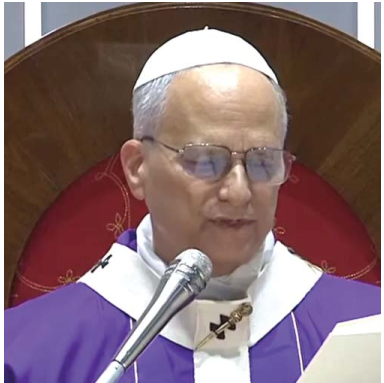
His unprecedented launch of a worldwide digital consultative forum, enabling Catholics in remote and underserved communities to contribute to Church deliberations, signals a new democratic openness in ecclesial life. In his own words during the inaugural session: “A shepherd who cannot hear his flock cannot guide them; and a Church that does not listen cannot evangelize.” This initiative has earned him global admiration for blending innovation with pastoral attentiveness. He had also begun the campaign for a renewed preferential option for the poor. True to the Church’s long-standing social doctrine, he introduced the “Preferential Pastoral Option for the Abandoned.”
Unlike previous general appeals to help the poor, this initiative specifically targets those “whom society forgets to notice.” The program’s execution, which is a direct support to local parishes in slums, conflict zones, and remote rural villages, has been praised for bypassing bureaucratic delays. It reflects the spirit of Mother Teresa’s reminder that “the greatest poverty is being unloved and unwanted.” By bringing visibility to the invisible, Pope Leo XIV has reignited the Church’s mission at the margins. On Sunday, June 15, the Pontiff prayed for the victims of a “terrible massacre” in Benue State, Nigeria.
Around 200 people were “brutally killed” in Yelwata, in the Guma Local Government Area of Benue State, on the night of the 13th/14th June; most of them internally displaced persons “sheltered by the local Catholic mission”. This caught the attention of the Pope and he voiced his exhortations to Nigerian government to shepherd her citizens. This shows he is running a responsive papacy. Another of his bolder early moves was the establishment of a Global Commission to review seminary formation. He calls for priests who embody intellectual rigor, psychological maturity, and pastoral compassion. I was among the few voices who have been raising opinions for the review of our major seminary curriculum, in the wake of the third millennium with its peculiarities.
The curriculum by which priests were formed in the pre-Vatican II era don’t seem to have factored in the challenges of the Church in the 21st century AD. There is need to rejig it, to better equip our clergy for the pastoral challenges of this GenZ age. Pope Leo’s directive to the Commission is already gaining traction within seminaries: “Form priests who can think clearly, preach truthfully, and love deeply.” This threefold formula points toward a reform that could shape modern generations of clergy. In another development, how uncompromising stance on clerical abuse has drawn attention for its swiftness and clarity. His decree mandating real-time reporting of abuse allegations to independent review bodies breaks decisively from past opacity.
Echoing Pope Benedict XVI’s teaching that “the truth is the strongest form of charity,” Leo XIV demonstrates that healing begins where secrecy ends. This move, though administrative on paper, marks a moral turning point with long-term implications for ecclesial credibility. Although less visible to the public, the Pope’s diplomatic strategies have already borne fruit. He has facilitated humanitarian corridors in two conflict-plagued regions (e.g Middle East) and initiated dialogue with governments previously estranged from Rome. Recall the historic event of Wednesday October 22, 2025, when he received King Charles III with open arms at the Vatican. In a private audience with ambassadors of different countries, he offered a profound insight into his diplomatic philosophy: “Neutrality is not silence; it is the freedom to speak for the suffering without fear or favor.”
This approach reflects a diplomacy rooted not in power but in conscience. While major magisterial documents are still forthcoming, the Pope’s homilies, audiences, and pastoral letters offer strong hints about the doctrinal contours of his future pontificate. Within these first six months, he appears committed to a doctrinal emphasis that places Christ at the center of all pastoral and theological renewal. His consistent theme, has been “return to kerygma, the foundational proclamation of the Gospel.” Quoting Romano Guardini, he recently affirmed: “Christianity is not an idea but a life; not a theory but a presence; Christ Himself.”
Expect future teaching documents that strengthen Eucharistic theology, catechesis, and Scripture-based evangelization. From the foregoing, he will likely maintain Catholic moral teaching without ideological distortion, but present it with a posture of invitation rather than condemnation. He insists that truth must be accompanied by mercy. As St. Thomas More once wrote: “Mercy does not weaken justice; it perfects it.” This tension of clarity without rigidity, compassion without compromise, may become a hallmark of his doctrinal leadership. Pope Leo XIV, like his predecessor, Pope Francis, is a disciple of environmental conservation. He has described environmental destruction as a “sin against hope.” He is expected to release an encyclical that integrates environmental stewardship, economic inequality, and intergenerational responsibility.
His framing of ecological care as a moral issue, not merely a political one, echoes Pope Francis while introducing new theological depth. In the area of digitisation of missionary catechesis, the Supreme Pontiff has shown a clear signal of where he is headed. Unlike previous popes, Leo XIV speaks fluently about the digital world as a “field of mission.” He envisions trained “digital missionaries” who can bring theological clarity to a space often marked by confusion and misinformation. He recently quoted St. Paul’s missionary ethos: “I have become all things to all men, that I might win some.” He added: “In our age, we must also become present in the spaces where minds and hearts now dwell, the digital continent.” This suggests future doctrinal guidelines on digital ethics, content integrity, and evangelization strategy.
He is also bent on deepening interreligious dialogue without doctrinal dilution. Yes, he is committed to dialogue, but he insists that dialogue begins from identity, not ambiguity. His outreach to Islam and Eastern religions has been warm yet firm. During a recent interfaith symposium, he remarked: “Authentic dialogue is not the trading of beliefs but the meeting of convictions in truth and respect.”
We should be expecting a pontificate that widens the table of dialogue while safeguarding Catholic self-understanding. If these first six months serve as an interpretive lens, Pope Leo XIV may be steering the Church toward: centring the Christian life on spiritual essentials, as well as reforming ecclesial structures through transparency etc. His actions whisper rather than shout, yet their impact is undeniable. He has positioned himself as a pontiff of healing and renewal.
• Jude Eze is a Medical Laboratory Scientist and, Columnist and Public Affairs Analyst. He can be reached through ezejudeogechiggmail.com or 08085764100 (SMS only).