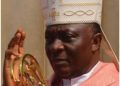
With preparations underway for a fresh round of elections across the Archdiocese of Lagos, the Lagos Archdiocesan Laity Council has set its sights on a year of deeper formation, stronger collaboration and stricter adherence to due process. At its 2026 Annual General Meeting (AGM), the council took far-reaching resolutions aimed at strengthening leadership, promoting justice and ensuring that the lay faithful are better equipped to play their God-given role in Church and society. In this interview with NETA NWOSU, the Editor, Very Rev. Fr. Oscar Obi, Director of the Lay Apostolate and Chaplain of the Archdiocesan Laity Council, speaks on the implications of those resolutions, the guiding theme “Faith and Citizenship: Building a Just and Compassionate Society”, and his vision for a more united, enlightened and mission-driven laity in the Archdiocese.
Fr., what were some of the key resolutions reached at the recently held Lagos Archdiocesan Laity Council AGM, and how will they shape the council’s activities this year?
The resolutions reached at the 2026 Laity Annual General Meeting (AGM) will definitely shape the council’s activities as the Archdiocese embarks on general elections this year, starting in February, to elect new leaders. The issue of irregular suspensions or the removal of officers without following due process has been given significant attention; as such, I believe these instances may not occur this year, as everyone is now aware of the implications. Furthermore, as more people participate in the programmes organised by the Directorate and AEMP programme, there is a greater possibility of having more enlightened leaders who are ready to carry out the mandate of Christ effectively within our Archdiocese.
How does the theme “Faith and Citizenship: Building a Just and Compassionate Society” inform the council’s plans and initiatives, moving forward?
The theme, “Faith and Citizenship: Building a Just and Compassionate Society,” invites us as Christians to strive for the betterment of the state to which we belong. Our actions and decisions must bear a “human face” so that we promote a just world for everyone, regardless of status. The Archbishop emphasised the importance of this theme, reminding us that we are citizens of two cities: The City of God and the city to which we belong. We are, therefore, called to take responsibility in building a just society and cannot afford to fail in this duty. Our leadership style going forward will be judged by these qualities. If a leader’s actions do not promote justice and compassion, they are not on the path envisioned by the Archbishop and the Directorate; such leaders must be encouraged to retrace their steps for the good of the Church’s mission.

As Chaplain, what are your primary responsibilities, and how do you support the laity in their spiritual journeys?
Responsibilities of the Director of Lay Apostolate are:
Management:
Overseeing the Lay Apostolate Centre in Ebute Metta, which houses the St. John Bosco Computer School, the Director’s office and offices of various Archdiocesan organisations and societies.
Formation:
Training and forming the laity for evangelisation. The Directorate assists the laity in their spiritual journey by organising pastoral and spiritual seminars, aimed at empowering them for effective leadership and growth in the faith.
Catechesis:
Helping the faithful know their faith and grow spiritually through reflections, workshops and seminars.
Events:
Organising annual Archdiocesan events such as Valentine’s Day with the Archbishop and Singles’ Day with the Archbishop.
Administration:
Serving as the Secretary of the Board of the Anthony Cardinal Okogie Foundation (ACOF), which educates citizens and raises funds for the training of indigent students in Nigeria.
What have been some of the most rewarding experiences in your role so far?
So far, this appointment has been a profound blessing. The position of Director of Lay Apostolate and Chaplain of the Laity Council brings many challenges, but also immense opportunities to impact lives. Unlike the Parish system, where one deals primarily with local Parishioners, the Director’s jurisdiction is wider and more encompassing. It involves dealing with all Deanery Councils, Lay Organisations, Societies and Associations within the Archdiocese of Lagos. This role has also afforded me the opportunity to work closely with the Archbishop, from whom I have learned a great deal. While organising large-scale programmes is tasking, however it is deeply interesting and impactful.
What challenges have you faced working with lay leaders and organizations, and how have you navigated them?
There are no serious challenges at the moment, save for the need for some leaders to more fully implement the Lagos Archdiocesan Governance Guidelines. However, with constant support and enlightenment, many leaders are now doing what is necessary for the greater good of the Archdiocese.

How do you foster collaboration among diverse lay groups within the Archdiocese?
Fostering collaboration is a core responsibility of the Director. One way we achieve this is by assigning joint tasks to two or more groups to organise Archdiocesan programmes. When societies work together toward a common goal, it serves as evidence of effective collaboration. Events like Valentine’s Day with the Archbishop are organised by the Lay Apostolate Centre in direct collaboration with these societies. I often emphasise to the lay faithful that all Councils, Organisations, Societies and Associations share one primary goal: the salvation of souls. Rather than focusing on our differences, we emphasise what unites us—the water of Baptism.
What advice would you give to lay faithful seeking to deepen their involvement in Church activities?
My advice to those seeking to deepen their involvement in Church activities is first to thank them for taking such laudable steps in our pilgrim journey. There are several avenues available at the Parish, Deanery and Archdiocesan levels. The Archbishop’s homilies, exhortations and teachings are invaluable resources. The Bible, the Catechism of the Catholic Church and various spiritual articles are readily available in our Catholic bookshops. By listening to these teachings, researching extensively and remaining committed to prayer, we will surely deepen our faith and spiritual growth.
What are your hopes for the lay organizations and societies within the Archdiocese this year?
My hope for all Lay Organisations, Societies and Associations this year is that they strive to be more committed and engaged groups and strive to be the best version of themselves. I encourage them to promote their specific apostolates and remain deeply committed to their faith and life in Christ. Be intentional in the work of Evangelisation, bring more people to the faith, striving always to do the will of God in all circumstances.
Looking ahead, what are your priorities for the Lagos Archdiocesan Laity Council, and how will you work to build a stronger, more vibrant community?
Our priority is to help leaders and the faithful work together to build a just and compassionate society so that all may enjoy true peace and progress. As the “salt of the earth” and “light of the world”, our activities must make a difference in society, making the world a better place beginning with the family, the Church and the wider community.
What are the key goals for the Directorate?
Our core goals are to deepen and broaden our positive impact on the lives of the faithful across the Archdiocese, strengthen collaboration among all lay groups, nurture a healthier and more harmonious relationship between the clergy, the religious and the lay faithful, and ensure the faithful implementation of the Lagos Archdiocesan Governance Guidelines at every level. These objectives, and even more, will be achieved through prayer, catechesis and consultations and collaboration with all lay groups, while consistently promoting a culture rooted in mutual respect, love, openness and compassion. Firmly trusting in God, for whom all things are possible, we are confident that by His grace we shall accomplish these goals and beyond.