Gradually, and almost imperceptibly, the value placed on human life appears to be thinning across societies. Fear has become a constant companion of daily existence. In places of worship, prayers are now routinely offered against kidnapping and sudden death; on the roads, travellers move with apprehension; in markets, insecurity stalks commerce; and even those who journey far from home do so with the unsettling knowledge that return is no longer guaranteed. Death, once an interruption of life, now seems woven into its texture.
Within this atmosphere of anxiety and uncertainty, one crisis demands particular attention for its quiet devastation: the rising incidence of suicide. Suicide is not a novelty in human history, yet its contemporary surge gives it disturbing prominence. Globally, more than 720,000 people die by suicide every year, translating to one death approximately every forty seconds (World Health Organisation [WHO], 2021). Early estimates indicate that by the first weeks of February 2026, about 95,000 deaths had already occurred worldwide, cutting across continents, cultures, and Let’s curb the surge of suicide economic divides. Geographically, the burden is heaviest in low- and middle-income countries, which together account for nearly three-quarters of global suicide deaths (WHO, 2021).
Asia bears the largest absolute numbers due to population size, while Africa shows a worrying upward trend, driven by socio-economic strain, insecurity, and limited access to mental health care. The demographic pattern is equally troubling. Suicide ranks among the leading causes of death for young people aged 15 to 29 years globally, placing it at the heart of youth mortality rather than at the margins (WHO, 2021). Men consistently account for a higher proportion of recorded suicide deaths than women, although women often report higher levels of suicidal distress and non-fatal attempts. In many African societies, including Nigeria, young adults in their late teens, twenties, and early thirties constitute a significant share of documented cases, representing a loss of lives at their most productive and hopeful stages (Gureje, 2018).
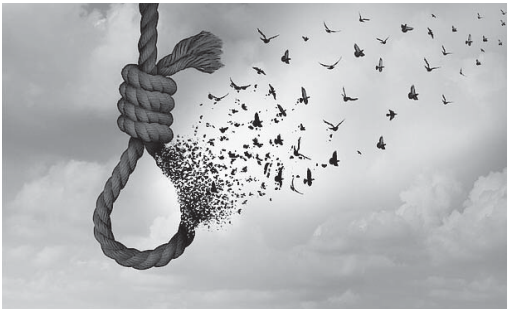
In Nigeria, available estimates suggest that approximately 15,000 people die by suicide annually, a figure widely acknowledged to be conservative due to stigma, cultural silence, and underreporting (Adewuya & Makanjuola, 2009). The geographical spread cuts across urban and rural settings, with cases reported in major cities as well as agrarian communities. Socio-economic hardship, unemployment, relationship breakdowns, academic pressure, and untreated mental health conditions frequently appear as background factors. The persistence of legal and cultural sanctions against suicidal behaviour further compounds the problem by discouraging open discussion and timely help-seeking.
Despite sustained scholarly engagement by sociologists, psychologists, counsellors, theologians, social workers, and medical experts, the problem continues with alarming momentum. The abundance of theories has not translated into proportional relief on the ground. This disconnect suggests that suicide is not merely an academic puzzle but a deeply social phenomenon rooted in everyday experiences of pressure, isolation, and despair. It reflects fractures within families, communities, and institutions, as well as a broader failure to provide meaning, security, and belonging in a rapidly changing world. A critical dimension of the present crisis lies in generational dynamics. One defining feature often observed among younger generations is a shortened attention span shaped by rapid technological change and constant stimulation.
This frequently coincides with diminished resilience in the face of sustained difficulty. Where older generations might instinctively ask how to endure, repair, or adapt, many younger individuals, overwhelmed by cumulative pressure, are tempted to ask how to escape. This contrast is not a moral judgment but a social diagnosis pointing to environments that demand performance without adequately teaching patience, endurance, and hope. Parenting patterns and socialisation processes therefore demand serious re-evaluation. Many families, often unintentionally, transmit anxiety, unrealistic expectations, or emotional distance.
Communication within the home weakens, leaving young people without safe spaces to articulate fear, failure, or confusion. At the same time, external pressures from economic hardship, academic competition, insecurity, and relentless social comparison accumulate, creating a psychological burden that feels unbearable when carried alone. Freedom, when detached from guidance and accountability, easily turns into isolation, while excessive control without empathy breeds suffocation and silent despair. The surge in suicide is thus not an isolated personal tragedy but a mirror reflecting collective shortcomings.
It calls for renewed attention to how families listen, how communities support, and how societies protect the dignity of life. Addressing this crisis requires more than condemnation or abstract theorizing; it demands a culture that normalises honest conversation, strengthens resilience, and affirms that no struggle must be faced in solitude. Only through such deliberate, compassionate reorientation can life regain its weight, its worth, and its meaning in a world increasingly accustomed to loss.

• Rev. Fr. (Dr.) Okhueleigbe Osemhantie Ãmos is a priest of the Catholic Diocese of Uromi and a Lecturer at CIWA, Port Harcourt, Nigeria.